
Week 3 of my Spring Equinox Experiment (Feb 9–Feb 15) was a travel week, and I was a bit anxious about how the data would turn out. It included a birthday dinner, Valentine’s Day, and a weekend away with friends. In other words: it was not an ordinary week, and I spent a lot more than my baseline spending. Upon first glance, it looks like I totally blew it.
But – it was still a good week.
Before I tell the story, here are the numbers.
By the Numbers: Week 3 Progress
Meals from Home Cooking: 7 | Outsourced Meals: 7
Containers/Packaging: 1 single-use container
Financial Impact
- Spent on convenience (takeout/DoorDash): $0
- Spent on dining out (restaurants): $692.69
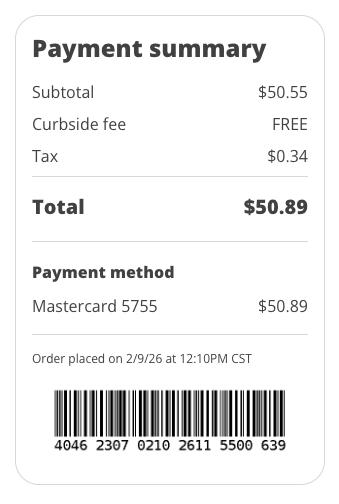
- Spent on groceries: $50.89
- Total food spending: $743.58
Comparison to Baseline
- Baseline average: ~24 containers/week → 96% reduction
- Baseline average: ~$81/week convenience → Week 3: $0 (100% reduction)
- Baseline average: ~$162/week dining out → Week 3: $692.69 (328% increase)
- Baseline average: ~$88/week groceries → Week 3: $50.89 (42% reduction)
The bottom line: Week 3 was far above my baseline average of ~$330/week, but nearly all of that increase came from deliberate exceptions (travel + celebrations) rather than convenience spending.
Three-Week Snapshot
Across Weeks 1–3, my home cooking has provided 28 meals and I’ve used just 6 single-use containers total (compared to a baseline of ~72 containers over three weeks). I’ve spent $1,073.18 on food — about $83 more than my old baseline pace (~$990 over three weeks).
Week 3 In Photos
Reframing the Story of These Numbers
This is the lesson I’m learning as I try to build a more restorative default way of eating: not all “eating out” is the same.
My old default choice was often to eat out because I hadn’t planned ahead and I needed to eat right now. I would hit that point where I’m hangry, short on patience, and suddenly every option except “fast” feels impossible.
That type of eating out is a drain. Other eating out can be a deliberate choice that supports connection, celebration, and learning.
So instead of trying to judge Week 3 as “good” or “bad,” I’m using it to introduce a framework that I think will carry me through the rest of this experiment.
Week 3 is exactly why I need a different way to interpret my numbers.
The Framework: Default vs. Deliberate
When it comes to food spending (and honestly, a lot of other habits), I’m learning to separate my choices into two buckets without judging each decision as good or bad.
Because the truth is, life is nuanced. Balance is not “never splurge” or “always indulge.” Balance is being able to hold two truths at once: I want to be mindful and consistent, and I also want to celebrate and connect with people I love.
Default Dining Out
Default dining out is what happens when I’m on autopilot instead of mindfully caring for my body.
It is:
- Convenience-driven.
- Unplanned.
- The “ordinary Tuesday” kind of eating out.
- The kind that sneaked in and quietly became a baseline for my habits.
Default dining out is not morally bad. It is just expensive in money, energy, and often packaging, too.
Deliberate Dining Out
Deliberate dining out is when eating out is part of something I value.
It is:
- Chosen on purpose.
- Tied to a clear value (connection, celebration, travel logistics, learning a skill).
- A named exception, not a vague drift from my real values and desires.
The goal of this experiment is not to eliminate deliberate dining out.
The goal is to mindfully prepare more meals, consciously reduce waste from single-use containers, and to stop paying restaurant prices for ordinary days simply because I didn’t plan.
What made Week 3 expensive (and why I’m okay with it)
Instead of viewing this as one big “I ate out a lot” blob, Week 3 breaks down into deliberate categories.
All amounts below include me and Emily together (because that’s how these meals were paid for and experienced).
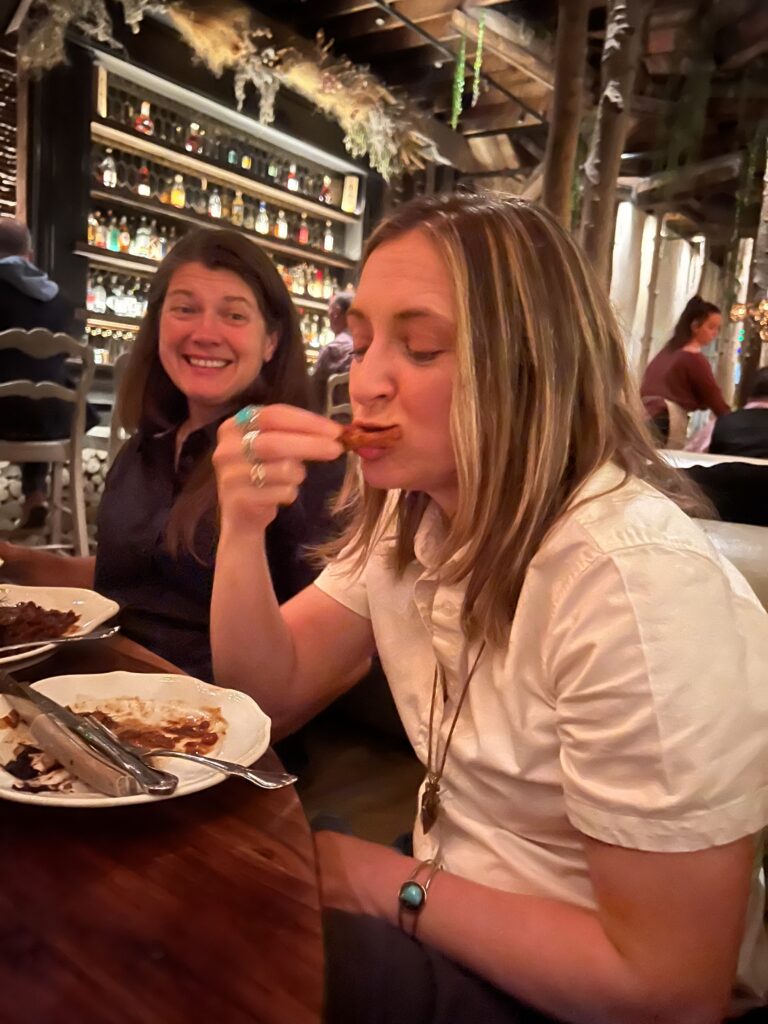
1) A friend’s birthday dinner: $132
This was a nice restaurant dinner to celebrate someone I care about.
This is exactly the type of expense I want to keep.
It is a relationship ritual, not an avoidance pattern.
2) Travel lunches: $98
Travel changes the rules. You can pack snacks, but there will still be meals where the realistic option is to buy food. (And unfortunately, it’s even more costly on the road!)
I’m okay with this category too, because it’s honest about logistics.
The question isn’t “Can I be perfect while traveling?”
The question is “Can I travel without sliding into my old baseline for weeks afterward?”
(Little side note: I carried my own water bottle and chose not to buy bottled drinks at least!)
3) Valentine’s Day: $188 (including alcohol)
This was a conscious splurge.
The reason I’m tracking it isn’t to guilt myself. It’s to make sure I’m naming it clearly: this is a deliberate exception.
If it shows up as a spike in the numbers, I want it to be because I chose it.
The Meal That Matters Most: The Cooking Class
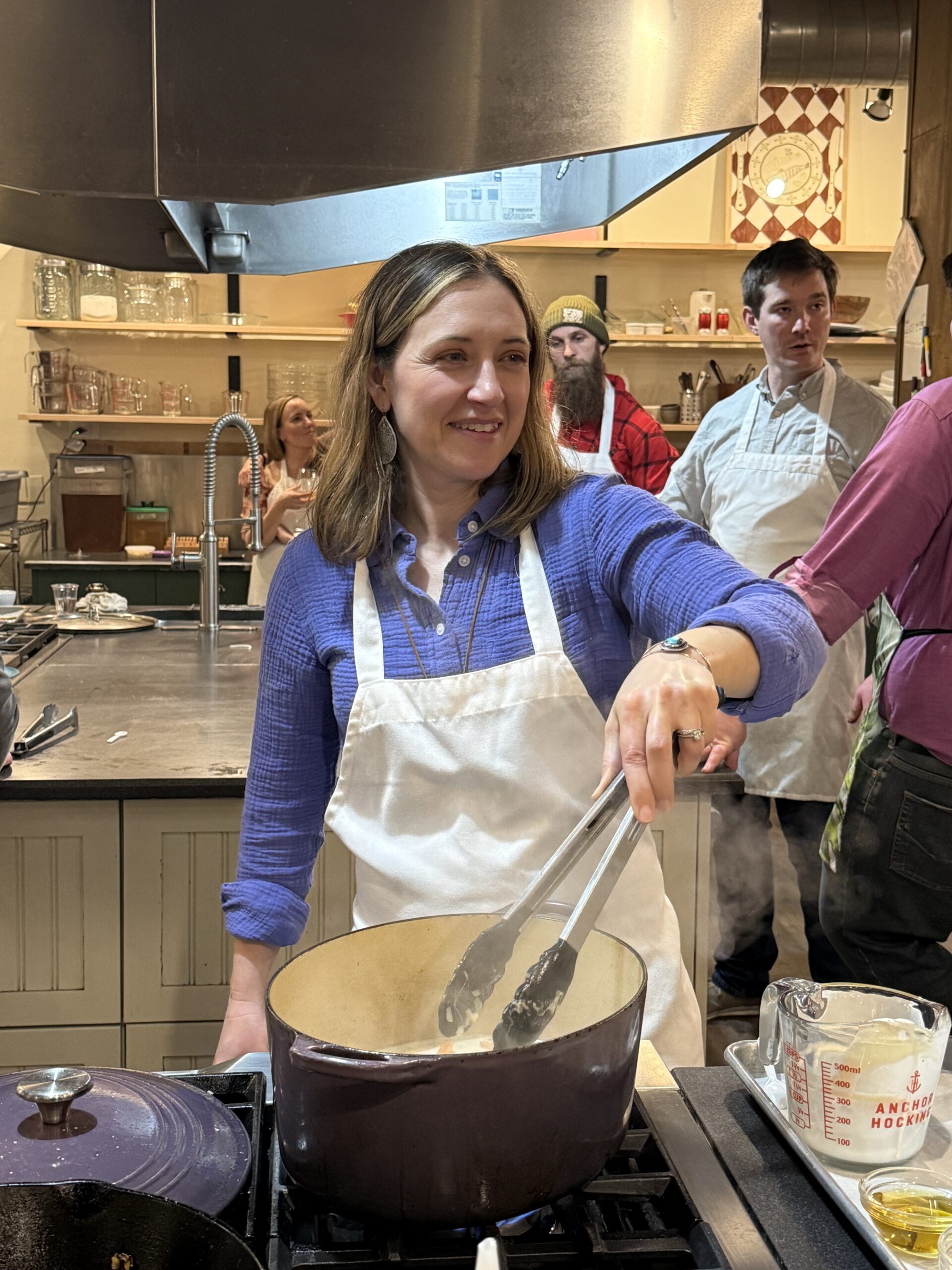
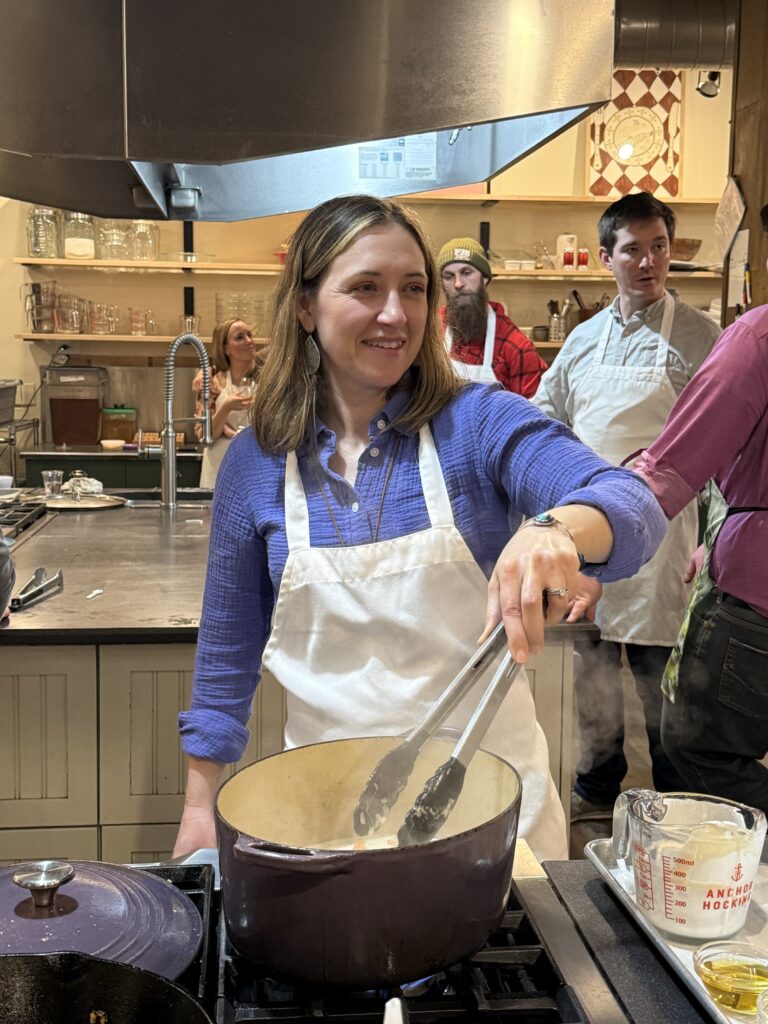
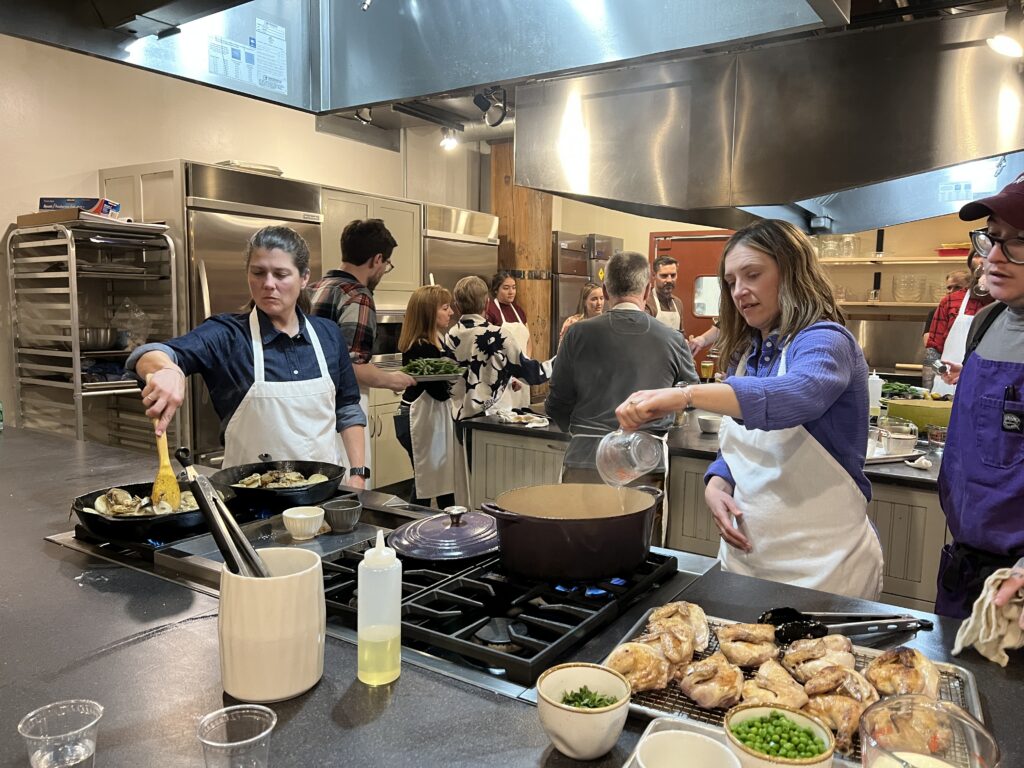
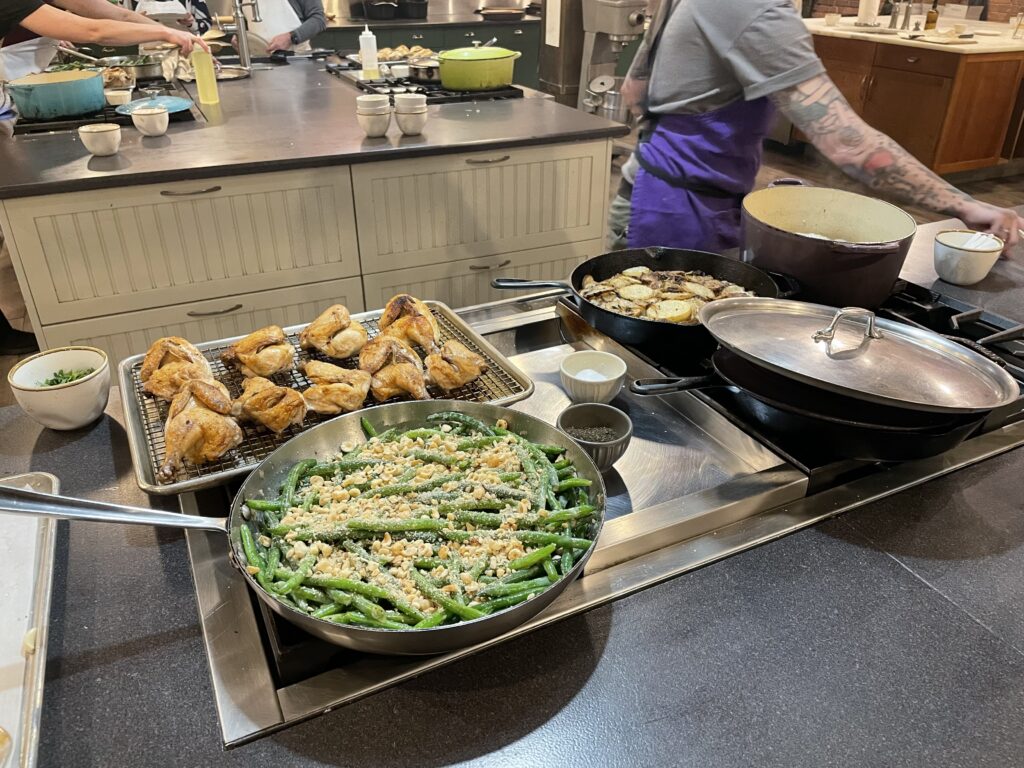
One of the best parts of the trip was a cooking class we took with friends. The menu included Cornish game hens, potatoes, peas and carrots, green beans, and tiramisu. It was fun to cook as a group and finally learn how to dice an onion properly!
I think of this expense as an experience as much as it was a meal, but for transparency, I still want to include it here because it belongs to Week 3’s lived experience:
Cooking class experience total: $250 ($125 each x 2)
This was not just another restaurant meal. It was a shared activity.
It was learning.
It was building skills I can bring home.
Not only did it feed me physically, it also fed me intellectually and relationally. Plus, I was able to see exactly what went into each part of the meal, creating that sense of mindfulness I’ve been trying to embody through this experiment.
Deeper Reflections (What I’m Learning)
Week 3 helped me see something clearly:
I don’t want to eliminate all dining out. I want to change my default habits.
This feels like a character shift for me: learning how to keep my “Metal” strengths (structure, planning, consistency) while inviting in more “Water” (flow, flexibility, kindness) when life calls for it.
I want dining out to be:
- A deliberate choice on travel weeks.
- A deliberate choice for celebrations.
- A deliberate choice for friendship and connection.
- A deliberate choice for learning experiences.
And I want my ordinary weeks to be different.
My working rule (still in progress) is simple:
If I’m not traveling or celebrating, I want to keep dining out costs low and treat anything above that as a deliberate exception.
I’m not trying to tighten the rule into a rigid system.
I’m trying to strengthen the default.
Another approach I’m thinking about is to invite friends over to my house so I can cook for others. I often meet up with one or two friends for lunch once or twice per week, so when my place works for the location and timeframe, I’d like to try hosting my friends for meals more often.
A Question to Reflect On
In my qigong teacher training and additional research, I’ve been learning a lot about the five elements of Chinese medicine over the last few months. One thing I’ve learned about myself is that I have a lot of Metal energy – that’s the type that is meticulous, likes organization, and is often quite rigid in their behaviors and practices. I know this is how I think, and likely has influenced my tendency to push myself through intense habit adherences like 100 Liminal Days (a project that started out extremely rigid, but ultimately taught me how to be gentler with myself!)
I feel like this Spring Equinox Experiment is helping me integrate the lessons of 100LD: continuing to be my Metal self, while balancing it with my other primary element of Water, which is more flow-y and forgiving. Giving myself some options to stay kind to myself when a choice to splurge and indulge has a clear intention feels like growth.
If you’re building a new habit (food-related or otherwise), here’s a question I’m sitting with after Week 3:
Where in life would it help to separate “default” from “deliberate”?
What would change if instead of judging the outliers and exceptions, I focused on shifting the baseline?
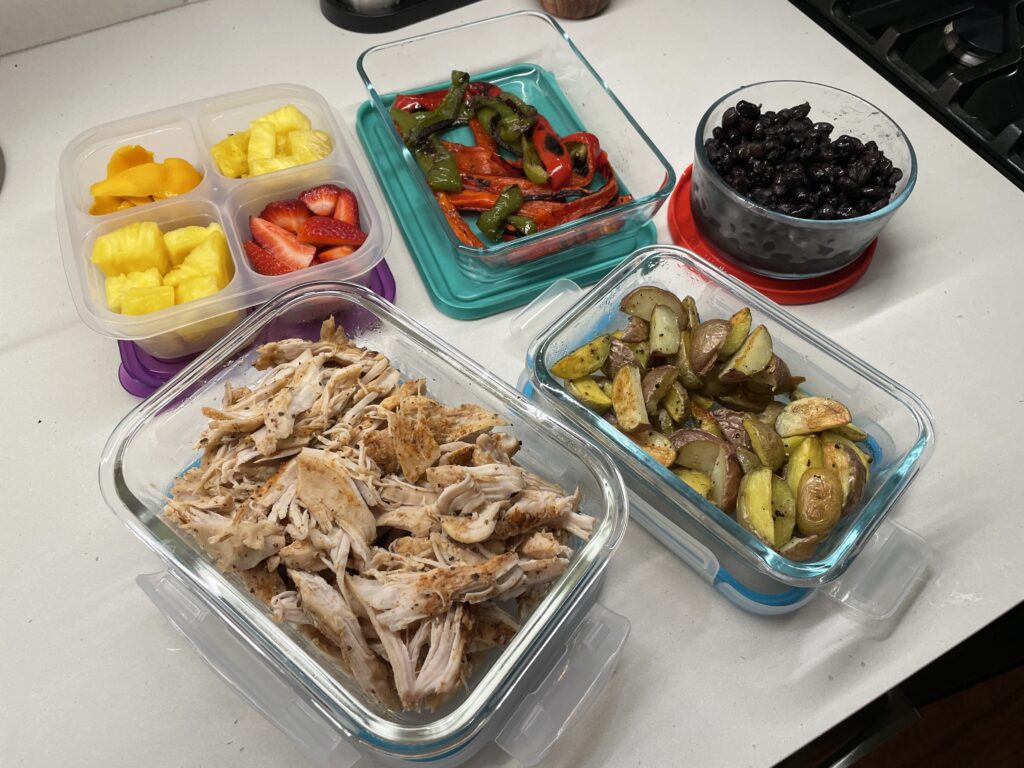
Stay tuned for next week’s report of the Spring Equinox Experiment. Since a few people have asked me how I’m spending so little at the grocery store, I plan to share more about what I’m ordering and preparing. Updates go live each week until March 20th. Sign up for my email newsletter to get this delivered to your inbox.
Leave a Reply
Get Weekly ReCaps of My Spring Equinox Experiment

Last year, I completed a project called 100 Liminal Days that changed my life and showed me the power of time-bound experimentation.
Now, from January 26, 2026 - March 16, 2026 (50 days), I'm working to build a sustainable restorative habit of cooking meals mindfully instead of eating so much takeout and pre-made meals in single-use containers. You can learn more about the project here. Check out the book that inspired the project, Meaningful Minimalism for inspo for your own exploration!
In my weekly newsletter, I will share updates on the experiment (like these!), short beginner-level qigong practice videos (like these!), and stories behind my art (like these!)
Sign up below to receive weekly updates and I'll send you this free Notion habit tracker template I created to elevate self awareness and journal about the day.
